REVIEW · FLAGSTAFF
Grand Canyon + Ancient Ruins + Volcano Full Day Christian Tour
Book on Viator →Operated by Canyon Ministries Christian Tours · Bookable on Viator
Grand Canyon, volcanoes, and Genesis in one day. This Christian tour from Flagstaff pairs famous South Rim overlooks with biblical creation teaching and volcanic geology during a tight 10-hour loop through three national sites. You’ll spend the day looking, listening, and tying the canyon’s rock layers to a Bible-based worldview as the drive shifts from high desert to canyon edges.
I like the way the day mixes big-name viewpoints with smaller, practical stops that keep the group moving. Guides such as Eddy and Dana are praised for balancing science and Scripture with a friendly style that answers questions without rushing anyone. It’s a tour built for people who want their awe to come with explanations, not just photos.
One thing to plan for: it’s a long day with lots of driving between viewpoints, and the best moments require staying alert on the schedule. Lunch is a timed break at Desert View with Market and Deli, and the vehicle may not fit large coolers if you bring your own food.
In This Review
- Key highlights you’ll feel on the day
- Leaving Flagstaff: the scenic setup before the South Rim
- From park roads to first canyon views at Yavapai Point
- South Rim drive stops: Desert View Drive and the canyon’s story
- Grandview Point: river distance, Wild West history, and copper dreams
- Lunch at Desert View Watchtower: good timing and realistic constraints
- Down into the Navajo Nation: the view changes fast
- Wupatki’s ancient ruins: Sinagua life and migration themes
- Sunset Crater Volcano National Monument: the optional loop that makes it real
- The day’s pacing: what “10 hours” actually means for you
- Price and value check: is $189 a fair deal?
- Who this tour fits best (and who should look elsewhere)
- Should you book this Grand Canyon + Volcano Christian day?
- FAQ
- What parks and monuments are included?
- How long is the tour and what time does it start?
- Is pickup available?
- What is the group size?
- Is park entry included in the price?
- What about lunch—do I need to bring it?
- How much walking is involved?
- What comfort items are provided?
- Is the tour in English?
- What if weather is poor?
Key highlights you’ll feel on the day
- Bible-based commentary at the canyon overlooks that connects Genesis themes to visible geology
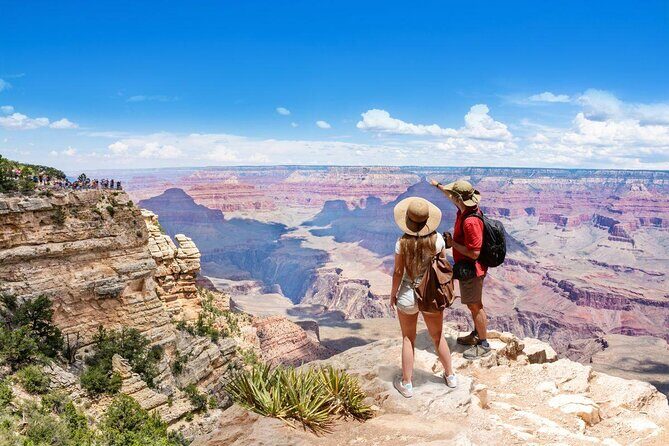
- South Rim viewpoints that cover both iconic and quieter angles, including Yavapai and Grandview
- Wupatki National Monument ruins tied to the Sinagua story and ancient migration themes
- Sunset Crater optional loop trail with up-close volcanic-rock views and crater features
- Small group size (max 12) and frequent guide check-ins for questions and needs
Leaving Flagstaff: the scenic setup before the South Rim
The day starts at the DoubleTree by Hilton Hotel in Flagstaff, with a pickup-centered rhythm (the tour also runs back to the same hotel). You leave at 8:00 am, and the whole plan aims to end around 6:00 pm, so you’re in for a full swing day.
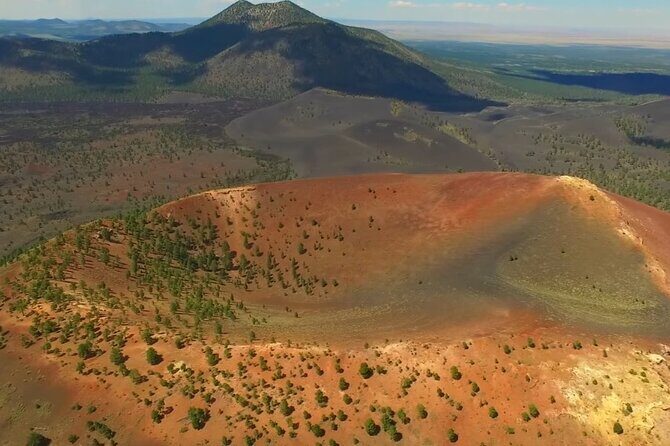
Before you even reach the canyon, you’ll ride through the San Francisco Volcanic Field. Along the way, you can spot cinder cones, and on clear days you’ll get big views of Humphreys Peak, the highest point in Arizona, often capped with snow much of the year. It’s a smart warm-up because it helps you understand why this area is full of volcanic leftovers.
Also, this is a “comfort-aware” format. The tour provides bottled water, umbrellas, binoculars, and blankets, which matters in the Southwest where the weather can switch fast.
If you're still narrowing it down, here are other tours in Flagstaff we've reviewed.

From park roads to first canyon views at Yavapai Point
Once you’re at Grand Canyon National Park (South Rim), you’ll do an easy introduction—then it’s time for your first real visual payoff. The tour includes park entry, and there’s a short drive through the park where elk are possible. Spotting wildlife from a bus window isn’t guaranteed, but this is the kind of place where you’ll look up often.
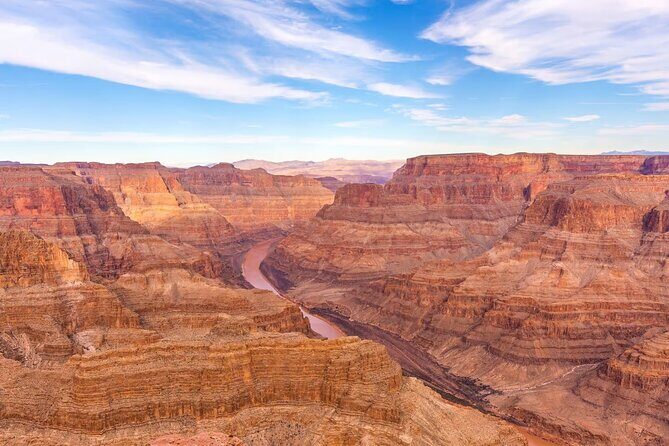
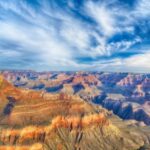
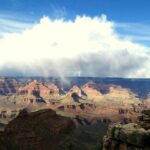
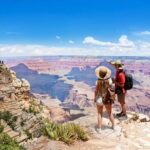
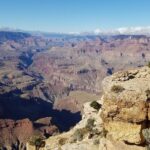
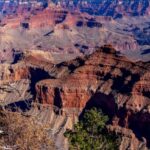
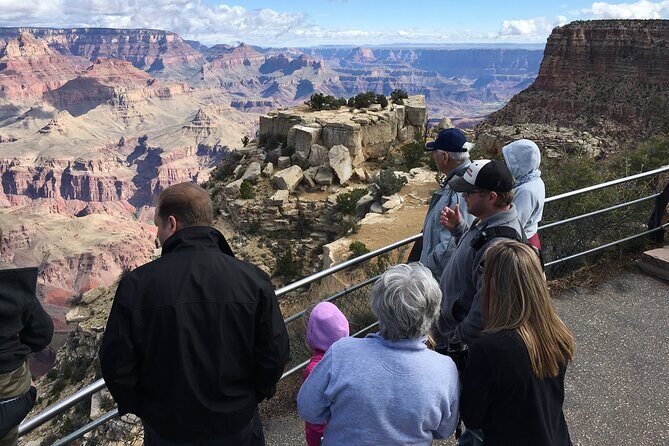
At Yavapai Point, you get a restroom break and then the first layered look into the canyon. This stop is all about getting your bearings fast: you’ll see the Bright Angel Trail, Phantom Ranch, and the Kaibab Suspension Bridge, with the Colorado River far below. It’s one of those “now I get why everyone talks about this place” moments.
A practical note: Yavapai Point is a good spot for photos, but you’ll still want to keep your focus on the guide’s explanation while you’re looking. The canyon makes more sense when you know what you’re seeing—especially the way different layers stack.
South Rim drive stops: Desert View Drive and the canyon’s story
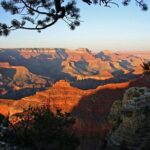
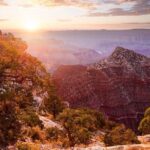
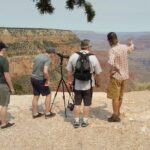
After the first overlook, you’ll shift into the most classic South Rim experience: more overlooks along Desert View Drive with time to actually look. This is where you’ll get the heart of the day’s teaching, because the guide connects visible rock layers to a Genesis-based creation and global Flood perspective.
What I like about this approach is that it doesn’t treat faith as a side note. The guide talks about how the canyon’s rock layers can be read through that lens, then explains a formation story focused on water moving fast—linked to ideas about lake spillover on the Colorado Plateau. You may agree or you may not, but either way, you’ll walk away with a clearer picture of the canyon as something shaped by time, pressure, and water—just interpreted through a different framework.
This portion also works well for groups because the stops are built around short segments of attention. You’re not asked to do a long hike to get value. If your feet need a break, you can still experience the canyon in a structured way.
Grandview Point: river distance, Wild West history, and copper dreams
Next up is Grandview Point, a stop that’s less about close-up angles and more about seeing the canyon’s vast scale from another direction. Here you’ll look toward the Colorado River and Tanner Rapid, which helps you connect the rim to what’s moving below.
This stop adds a different flavor: Wild West history, including copper mining, plus the kind of river stories a good guide can make feel real. If you enjoy travel days where the scenery comes with human context, Grandview Point is a good one.
Time here is about 30 minutes, so use it intentionally. Look first, then swap to photos. Your eyes adjust quickly when you’re not constantly switching between screen and view.
Lunch at Desert View Watchtower: good timing and realistic constraints
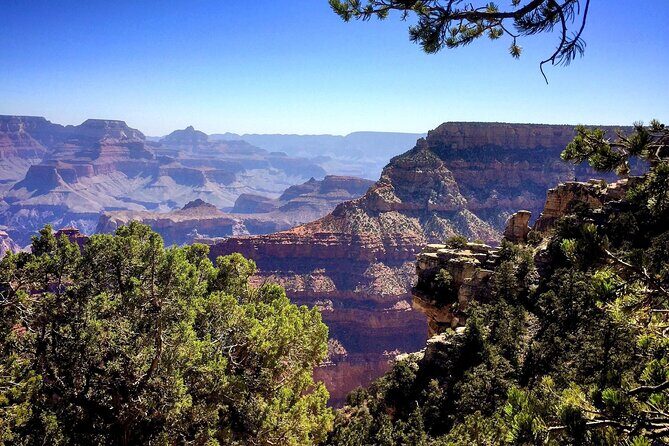
You’ll hit Desert View Watchtower for the lunch break. The included park segment gives you about 45 minutes, which is enough time to eat without feeling like you’re rushing—but not enough time to wander far and lose the group.
Food options are at the Desert View Market and Deli, with hot items, salads, and sandwiches, plus a small grocery store. You can also bring lunch, but the vehicle may not have room for large coolers. If you’re bringing food, plan smaller and keep it easy to carry.
What to expect from this stop: it’s practical. You’ll refuel, you’ll regroup, and you’ll get ready for the next big shift—down into the Navajo Nation region and then onward to the ruins.
A few more Flagstaff tours and experiences worth a look

Down into the Navajo Nation: the view changes fast
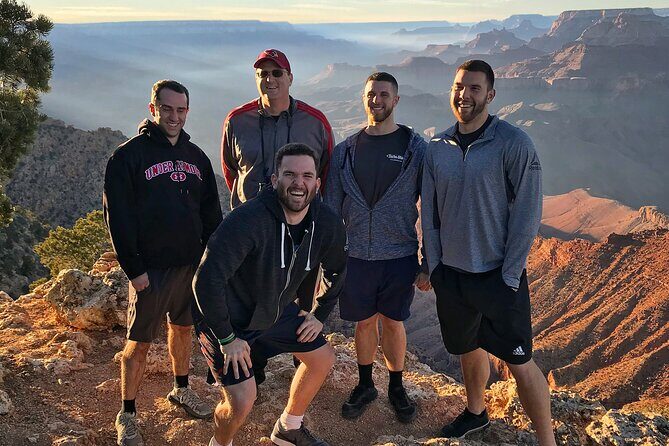
After lunch, the drive shifts into Navajo Nation territory. You’ll descend roughly 3,000 feet from the Kaibab Plateau, which is exactly the kind of change you feel immediately in the views.
This part of the day emphasizes the Little Colorado River Gorge and distant Painted Desert views. The canyon day is usually rim-focused, so this segment adds variety and makes the overall region feel bigger than one famous viewpoint.
You’ll spend about 30 minutes here. There aren’t entries or tickets included for this portion, which means it functions as a scenic, guided transition instead of a timed museum-style stop.
Wupatki’s ancient ruins: Sinagua life and migration themes
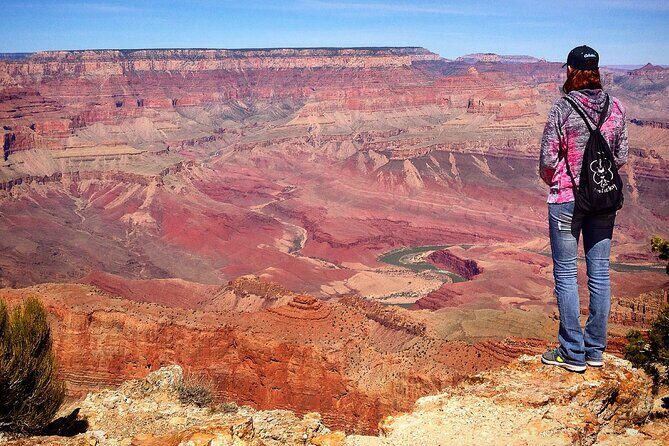
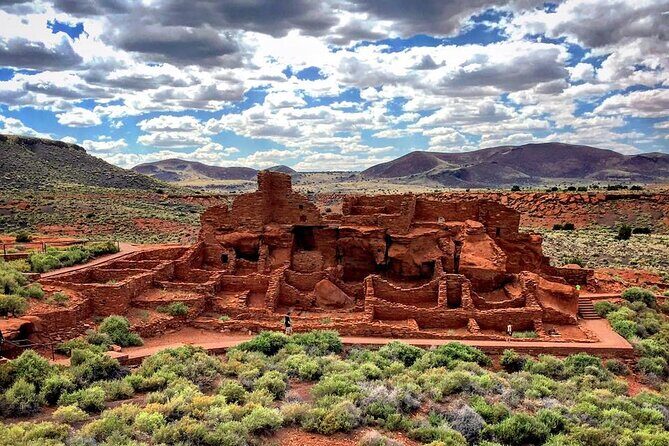
Then comes a totally different kind of awe: Wupatki National Monument. This is where the day turns from geology and big scenery into human history in high desert.
You’ll explore Native American ruins nearly 1,000 years old, with the guide covering Ice Age and migration themes tied to people moving and adapting across long time spans. The focus includes the Sinagua Ancestral Puebloans, once commonly referred to as Anasazi, and how they lived in this area.
One of the most interesting details here is the mention of Hisatsinom moving to the Hopi Mesas in the distance. Even if you don’t know the vocabulary yet, the way the guide explains the move makes the ruins feel less like random rock piles and more like evidence of real choices—where people went, why they left, and what they left behind.
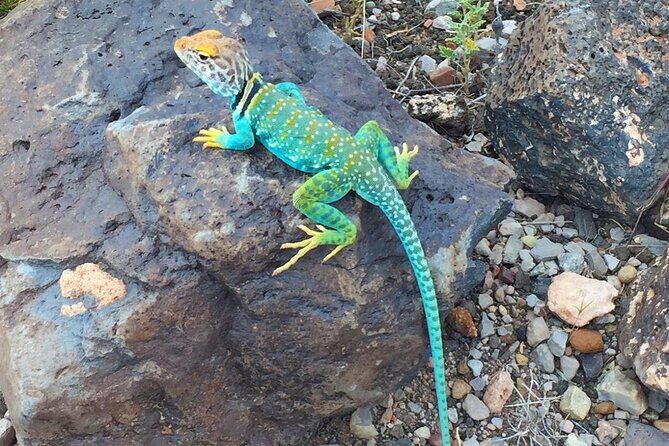
Wildlife adds another layer. Keep an eye out for pronghorn antelope, coyotes, or birds of prey, since this high desert scenery draws animals the way water draws people.
You get about 1 hour at Wupatki, and that’s a good amount of time if you’re balancing explanation with looking around. Wear sun-protective gear. High desert ruins don’t care about your hat.
Sunset Crater Volcano National Monument: the optional loop that makes it real
The drive from Wupatki to Sunset Crater Volcano National Monument climbs around 2,000 feet, and you’ll feel the vegetation change. You go from desert rocks and grasses up toward taller Ponderosa pines, while the scenery reflects the San Francisco Volcanic Field again—this time from the inside story of the volcanic features.
This stop focuses on Sunset Crater Volcano, described as the most recent eruption in the area. Once there, you’ll do a loop trail, described as optional. If you don’t want to walk, the tour also mentions additional viewpoints or shorter routes.
What makes this stop memorable is that the guide points out volcanic features you’d otherwise miss: ideas like lava tubes and caves, and spatter cone hornitos. Seeing those terms paired with actual rock formations is where the education sticks.
The time slot is about 1 hour, which feels right. It’s long enough for a real look, but short enough that you won’t lose the day to foot fatigue.
The day’s pacing: what “10 hours” actually means for you
This tour is designed as a full-day drive-and-look format. You’re not trekking for hours. Instead, you get repeated “arrive, view, listen, regroup” cycles—South Rim first, then scenic descent, then ruins, then volcano.
That’s good for families and mixed-age groups. One review described a multi-generational group with people from months old up to seniors, and this tour’s max 12 travelers setup makes it easier for a guide to manage pacing.
Still, it’s worth being honest: you’ll spend a lot of time looking out the window and waiting for the next viewpoint. If you love unstructured time, you may find the schedule a touch tight. On the other hand, if you want a plan that hits the big geography without you doing homework, this day runs smoothly.
Price and value check: is $189 a fair deal?
At $189 per person, you’re paying for more than bus transport. The tour includes entry fees to all three sites—Grand Canyon, Wupatki, and Sunset Crater—plus bottled water and comfort extras like binoculars, blankets, and umbrellas.
A big part of the value is the guiding approach. The day includes both science-based explanation and a Bible-based reading, with guides praised for being patient and answering lots of questions (and some guides mentioned by name include Eddy, Dana, Luke, and Bryce). If faith-driven interpretation is important to your trip, you’re not just buying scenery—you’re buying a framework for how to read it.
If you just want standard canyon photo stops with no religious teaching, this format might not match your expectations. But for people who like their awe paired with meaning, the cost feels like you’re paying for a guided story, not only access.
Also, this tour is booked far in advance on average (around 80 days), so if you’re traveling in busy periods, you’ll want to lock it in early.
Who this tour fits best (and who should look elsewhere)
This is a great fit if:
- You want South Rim highlights plus an added ruins-and-volcano arc
- You enjoy a guide who explains what you’re seeing and connects it to Scripture themes
- You prefer short stops over long hikes, with an optional walk at Sunset Crater
You might want a different style if:
- You want totally free time to wander at your own pace
- You prefer purely secular interpretation and don’t want Bible-focused discussion
Should you book this Grand Canyon + Volcano Christian day?
If you’re the kind of traveler who likes the Grand Canyon with context—geology, meaning, and clear viewpoints—this tour is a strong choice. The combo of South Rim overlooks, Wupatki ruins, and Sunset Crater’s volcanic features covers a lot of Arizona in one day without requiring an extreme hike.
Book it if a Bible-based lens is part of why you’re traveling, and if you’re okay with a structured, long day. Skip it if your priority is unstructured time or purely independent sightseeing. For the right traveler, this is one of those days where you don’t just see landmarks—you understand them.
FAQ
What parks and monuments are included?
You’ll visit Grand Canyon National Park (South Rim), Wupatki National Monument, and Sunset Crater Volcano National Monument. Entry fees for all three are included.
How long is the tour and what time does it start?
The tour runs about 10 hours. It starts at 8:00 am and typically returns around 6:00 pm.
Is pickup available?
Yes. The tour offers pickup, and it starts and ends at the DoubleTree by Hilton Hotel Flagstaff.
What is the group size?
The tour has a maximum of 12 travelers, which helps keep it manageable for a full day.
Is park entry included in the price?
Yes. Admission ticket/entry fees for the parks and monuments are included in the tour price.
What about lunch—do I need to bring it?
Lunch is a break at Desert View Watchtower, with food options at the Desert View Market and Deli. You may bring lunch too, but large coolers may not fit in the vehicle.
How much walking is involved?
Most of the day is driving and short stops. At Sunset Crater, there’s an optional loop trail, with additional viewpoints or shorter routes for those who prefer less walking.
What comfort items are provided?
The tour includes bottled water, umbrellas, binoculars, and blankets.
Is the tour in English?
Yes, it’s offered in English.
What if weather is poor?
This experience requires good weather. If it’s canceled due to poor weather, you’ll be offered a different date or a full refund. You can also cancel for a full refund up to 24 hours before the experience starts.