REVIEW · GRAND CANYON NATIONAL PARK
4-Hour Grand Canyon Morning Rim Tour featuring Biblical Creation
Book on Viator →Operated by Canyon Ministries Christian Tours · Bookable on Viator
A Grand Canyon morning with a purpose. This rim tour blends South Rim viewpoints with on-the-spot biblical creation teaching tied to the Flood story and canyon geology. You get the classic canyon views, but the guide keeps pointing out what they see as direct connections to scripture.
I especially like how the stops are built for both awe and learning: Yavapai, Grandview, Lipan, Navajo, and Moran Points each get its own focus, so the trip feels organized instead of random driving. I also like the practical comfort details for a morning outing—an air-conditioned vehicle, plus bottled water, binoculars, and even blankets and umbrellas.
One consideration: this is not a neutral geology lecture. The presentation is clearly rooted in a biblical creation worldview, so if you’re looking for only a secular explanation, you may not feel like the tour is speaking your language.
In This Review
- Key things to know before you go
- A 4-Hour Morning Canyon Ride With Biblical Creation Teaching
- Meeting at the Visitor Center and Rolling in A/C Comfort
- South Rim Overlooks Along Desert View Drive, With Flexible Stops
- Yavapai Point: Getting the Flood Framework First
- Grandview Point: Wild West Mining Stories and River Power Questions
- Lipan Point: Rapids Views, Ancestral Puebloans, and Rock-Layer Evidence
- Navajo Point: The Breached Dam Model and Big Viewlines
- Moran Point Wrap-Up: River Views Before Dropping You Back
- Price and Value: What $149 Buys You (Plus the Park Fee)
- Who This Tour Fits Best (and Who Might Want Another Option)
- Tips to Make the Most of Your 8:00am Start
- Should You Book This Biblical Creation Rim Tour?
- FAQ
- Is Grand Canyon National Park entry included in the tour price?
- What time does the tour start, and where do we meet?
- How long is the tour?
- What’s included with the tour?
- How many people are in the group?
- Does the route stay exactly the same each time?
- What happens if the tour is canceled due to weather?
Key things to know before you go
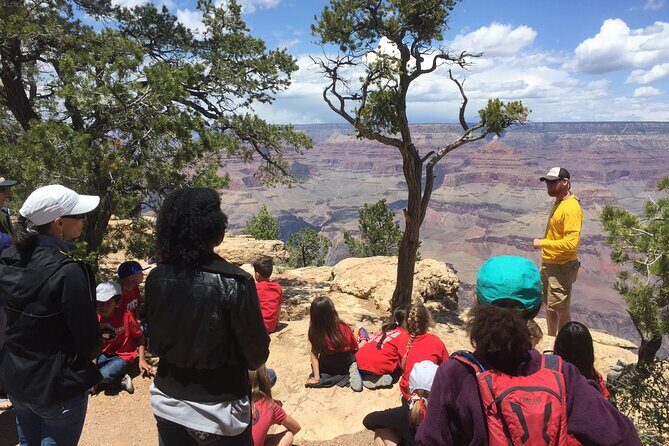
- Small group (max 12): easier questions and more time at viewpoints
- Guides can adjust stops: weather and crowds can change the exact route
- Biblical Flood framework: the canyon stops are tied to Genesis and a Flood model
- Short, viewpoint-first pacing: you’ll get multiple overlooks without a big hike
- Comfort kit in the van: bottled water, blankets, binoculars, umbrellas
- Park entry is extra: your $149 covers the tour, not the National Park fee
A 4-Hour Morning Canyon Ride With Biblical Creation Teaching
This is a 4-hour Grand Canyon South Rim tour designed for the first part of your day. The start time is 8:00am, so you’re back at the Visitor Center after the morning rush, with the canyon still feeling fresh and bright.
The core idea is simple: you’re not just looking. You’re listening. The guide walks you through what they believe the canyon shows, using a biblical creation lens—especially around the Genesis Flood. If you like your travel with a mix of visuals and meaning, this format can be a good fit.
It’s also a nice pace for people who want “Grand Canyon, but manageable.” You’re getting several major overlooks without committing to a strenuous hike or a full-day driving itinerary.
Other Christian and Biblical perspective Grand Canyon tours we've reviewed
Meeting at the Visitor Center and Rolling in A/C Comfort
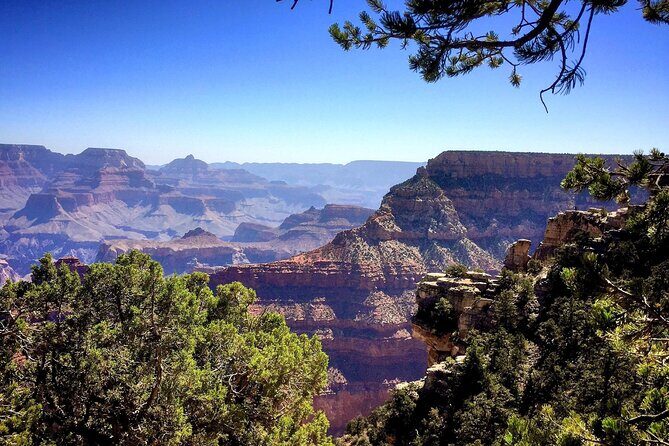
You meet at the Grand Canyon Visitor Center South Entrance Road in Grand Canyon Village (flagpole area outside the Visitor Center). The meeting point matters because the first viewpoint talk starts right away with you oriented to what you’ll see next.
Transportation is part of the value here. You ride in an air-conditioned vehicle, and you’re not stuck bouncing between distant pullouts in your own car. The included add-ons are genuinely useful in this climate:
- Bottled water
- Binoculars
- Blankets
- Umbrellas
Those “small comfort” items matter more than people think. The South Rim mornings can be cool, windy, and change fast, and the tour clearly plans for that. I also like the cap on group size—up to 12 travelers—because you’re not fighting for attention at the railings.
South Rim Overlooks Along Desert View Drive, With Flexible Stops
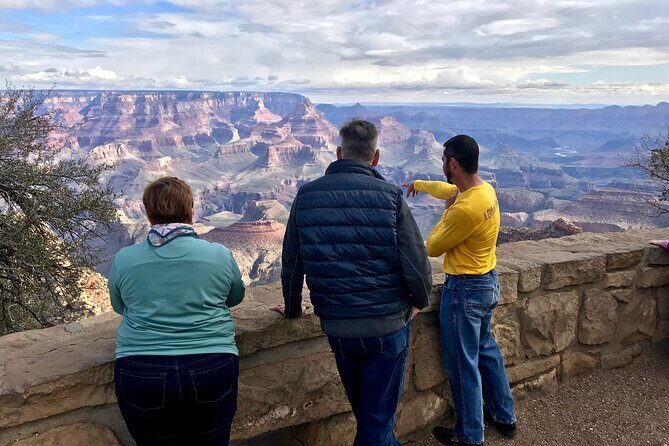
The route is described as a typical east-side pattern along Desert View Drive, but it’s not treated like a rigid script. The guide can swap stops based on weather, season, and visitor flow.
That flexibility is one of the smartest parts of the design. At the Grand Canyon, crowds and visibility can change quickly. If a viewpoint is slammed by traffic or blocked by conditions, you don’t just wait for things to improve—you pivot and keep the day working.
Also, the tour is built around viewpoint timing. You’ll get a solid block of time at each stop for photos and questions, without the long walks that can slow down a group.
Yavapai Point: Getting the Flood Framework First
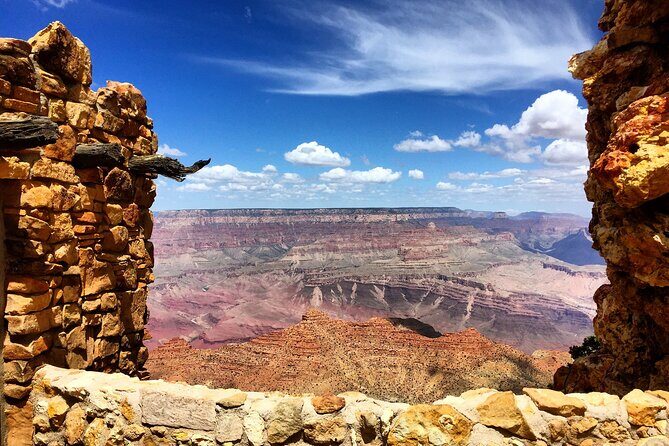
Your first true canyon introduction is Yavapai Point, starting near the Visitor Center. This stop is positioned as the foundation: the guide gives context for what you’re about to explore next, then connects it to the Genesis Flood story.
What I like about this approach is that it changes how you look. Instead of treating each overlook as a separate “pretty view,” you start the tour with a framework. You’re watching the canyon as evidence for a specific storyline, and the guide helps you connect rock shapes and layers to that narrative.
This first stop is also where you get oriented to the canyon’s scale. Yavapai Point is close enough to start comfortably, and it sets expectations so later overlooks feel like chapters, not detours.
Grandview Point: Wild West Mining Stories and River Power Questions
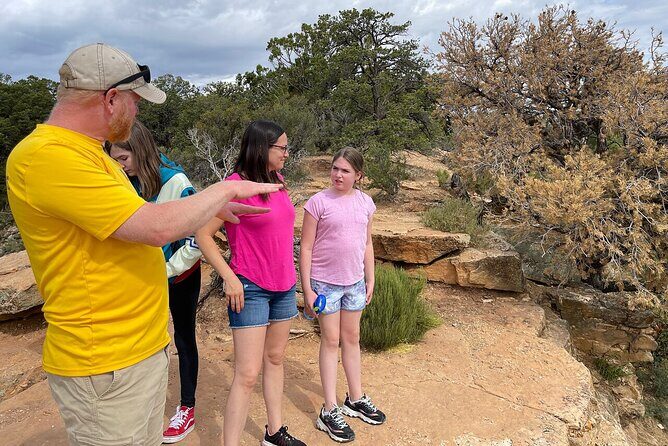
Next up is Grandview Point. This stop mixes two things: wide canyon views and a historical talk about the early Wild West days around the park area.
The guide focuses on mining—both copper and the old-time idea of “tourist pockets”—and then ties that history back to one big question: does the Colorado River have the power to cut and remove the material that shaped what you’re seeing?
The value here is that the talk gives you a mental model for how landscapes change. Even if you don’t fully buy any single model, you’re practicing a way of thinking: what forces could move rock, water, and sediment at the scale of what you see from the rim?
At Grandview Point, you also get a strong sense of distance, including a look toward the river. That helps the guide make the “how could it happen?” reasoning feel grounded in real geography.


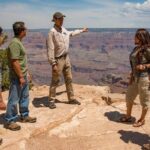
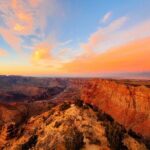
Lipan Point: Rapids Views, Ancestral Puebloans, and Rock-Layer Evidence
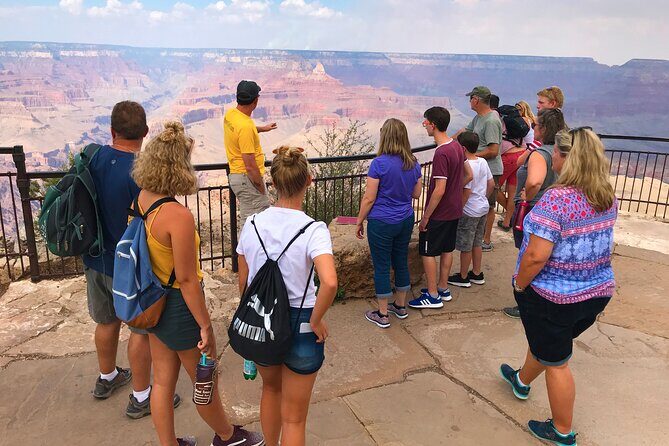
Lipan Point is where the tour leans hard into both cultural and geological themes.
On the view side, you’ll spend time taking in river scenery, including one of the canyon’s larger rapids. That matters because it’s easier to imagine water’s energy when you can see it actively working down there.
Then the guide shifts to the people story—explaining Native American Ancestral Puebloans who lived far below on the Unkar Delta. That human layer is a nice counterweight to pure geology. It reminds you the canyon isn’t only a scientific puzzle; it’s a place tied to real lives and survival strategies.
Finally, you get a detailed discussion of what the guide frames as “visible Flood evidence” in the rock record, including:
- the Great Unconformity
- the Cambrian Explosion
- the Tapeats Sandstone
This stop is the most “teaching-dense” of the tour. If you like getting your head around technical terms at a real-world setting, you’ll probably enjoy it. If you’re more into just soaking in views, you may want to balance listening time with photo time so the facts don’t crowd out the wonder.
Navajo Point: The Breached Dam Model and Big Viewlines
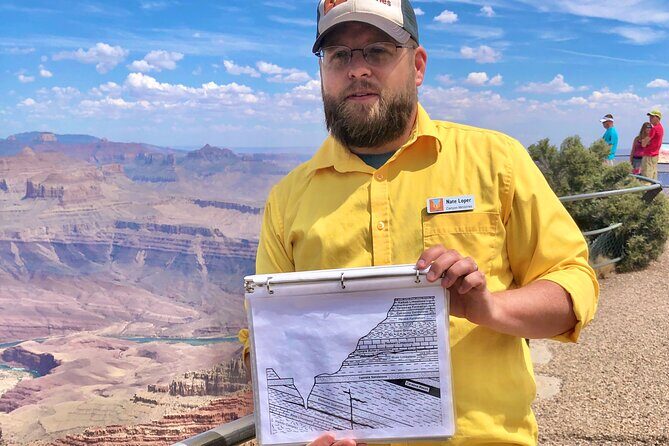
At Navajo Point, the tour shifts from broad explanation into what they call the lake spillover or breached dam model. The guide connects this to rapid canyon carving—again using a biblical creation lens for the mechanism and timing.
One reason this stop tends to work well is that you can see the canyon’s reach from here. The tour includes expansive looklines toward distant features like the Vermilion and Echo Cliffs of the Marble Platform, plus parts of the Painted Desert.
You’ll also learn about the historic Desert View Watchtower, completed in 1932. This is a useful reminder that the canyon’s story isn’t only natural; it’s also shaped by how people tried to observe it, interpret it, and build around it.
In other words, Navajo Point helps you connect geology, time, and human observation into one picture. Even if you’re skeptical about specific claims, the “here’s what you’re looking at and why it matters” method is solid.
Moran Point Wrap-Up: River Views Before Dropping You Back
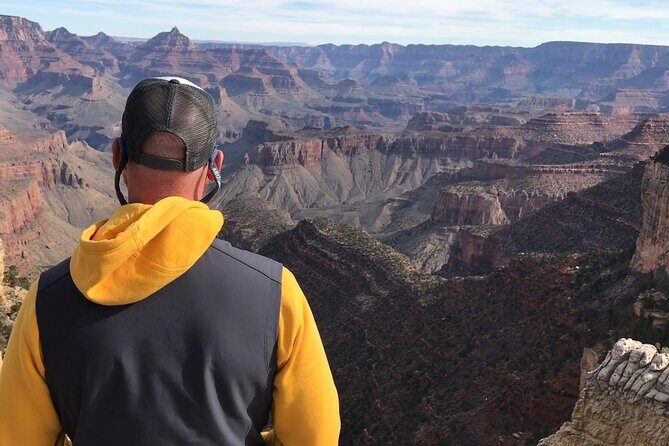
The final major viewpoint is Moran Point. You’ll get a longer block here (about 45 minutes) to enjoy the river, rapids, and wide scenery before heading back.
This ending matters because it gives you a chance to process everything you heard earlier. When you reach Moran Point after hearing the framework, it’s easier to compare what you’re seeing now with what the guide already explained.
After that, the guide drops you back at the Grand Canyon Visitor Center, near where you started. The tour ends back at the meeting point, so you can move on to breakfast, short walks, or whatever you planned next.
Price and Value: What $149 Buys You (Plus the Park Fee)
At $149 per person, this is not a cheap add-on. But it does include a lot that would be hard to replicate on your own in the same smooth, timed way:
- A 4-hour guided route with multiple South Rim overlooks
- Bottled water, blankets, umbrellas
- Binoculars
- Air-conditioned transportation
- A small group format (max 12)
The big “don’t miss this” detail is that Grand Canyon National Park entry isn’t included. You pay at the gate or use a National Park Pass. Entry is valid for 7 days, which is handy if you’re making the canyon the centerpiece of your trip.
For value, I think the decision comes down to what you want from your time at the canyon. If you want a self-guided drive and don’t care about structured teaching, you can do that for less. But if you want a guide who knows how to connect each viewpoint to a coherent storyline—and you want comfort without logistical stress—this price can feel fair for what you get.
Who This Tour Fits Best (and Who Might Want Another Option)
This tour is a strong match if you:
- enjoy faith-and-travel learning
- want scripture-connected explanations tied to what you see
- prefer short viewpoint stops over long hikes
- want a group day that still leaves room for photos and questions
It’s also friendly to mixed ages. One of the clearest signals from the guide style in past groups is that the teaching can be explained in a way a 15-year-old could follow, so families may like the clarity and pacing.
If you’re unsure, think about this: the tour is built around the biblical creation perspective, including a Flood model and Flood-linked rock-layer explanations. That’s the point of the day, not a side note.
If you’d rather only hear mainstream secular geology with no religious framing, this may feel too focused. In that case, you might prefer a different kind of guided canyon tour.
Tips to Make the Most of Your 8:00am Start
A few practical moves can help your morning run smoothly:
- Arrive a few minutes early at the Visitor Center flagpole area so you start on time.
- Dress in layers. Even with umbrellas and blankets provided, you’ll still feel better if you’re ready for wind and temperature swings.
- Use the included binoculars. They’re great for picking out distant cliff lines and river detail.
- Bring a phone camera with enough storage and charge. The tour builds in time at multiple points, and you’ll want quick shots.
- Plan for optional short walks, not long hikes. The tour is mostly viewpoint-based, with only brief walking opportunities.
Finally, if you have questions, ask them at the overlooks. The guide’s format is built to handle real-time “how does that work?” moments as you look.
Should You Book This Biblical Creation Rim Tour?
I’d book this if you want the Grand Canyon with structure: multiple South Rim viewpoints, comfortable transport, and a guide who explains the canyon through the Flood and biblical creation lens. The small-group size, the comfort inclusions, and the fast yet informative stop plan make it a strong option for a morning window.
I would hold off if you’re trying to spend your time in a purely secular way or you expect a long hike. This is built for seeing, learning, and looking again—not for trail grinding.
If your goal is to leave the canyon feeling like you understand more than you did when you arrived, this tour’s format is exactly designed for that.
FAQ
Is Grand Canyon National Park entry included in the tour price?
No. The tour price does not include the park entry fee. You can pay at the gate or use a National Park Pass, and entry is valid for 7 days of unlimited use.
What time does the tour start, and where do we meet?
The tour starts at 8:00am. You meet at Grand Canyon Visitor Center South Entrance Rd, Grand Canyon Village, AZ 86023, at the flagpole just outside the Visitor Center building (inside the park).
How long is the tour?
The tour runs for about 4 hours.
What’s included with the tour?
The tour includes bottled water, blankets, umbrellas, binoculars, and air-conditioned vehicle transportation.
How many people are in the group?
The tour has a maximum of 12 travelers.
Does the route stay exactly the same each time?
Not always. The tour is described as flexible, not scripted, and stops may change due to weather, seasons, or visitor flow.
What happens if the tour is canceled due to weather?
The experience requires good weather. If it’s canceled because of poor weather, you’ll be offered a different date or a full refund.