REVIEW · TUSAYAN
Grand Canyon Village: Grand Canyon South Rim Airplane Tour
Book on GetYourGuide →Operated by Grand Canyon Airlines · Bookable on GetYourGuide
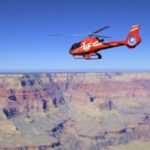
Grand Canyon looks different from the cockpit. This South Rim airplane tour takes you over the Zuni Corridor and the confluence of the Colorado and Little Colorado rivers, with sightseeing narration in many languages.
I especially like how the flight ties the big names on the map to what you’re actually seeing below, including Imperial Point and the Kaibab area.
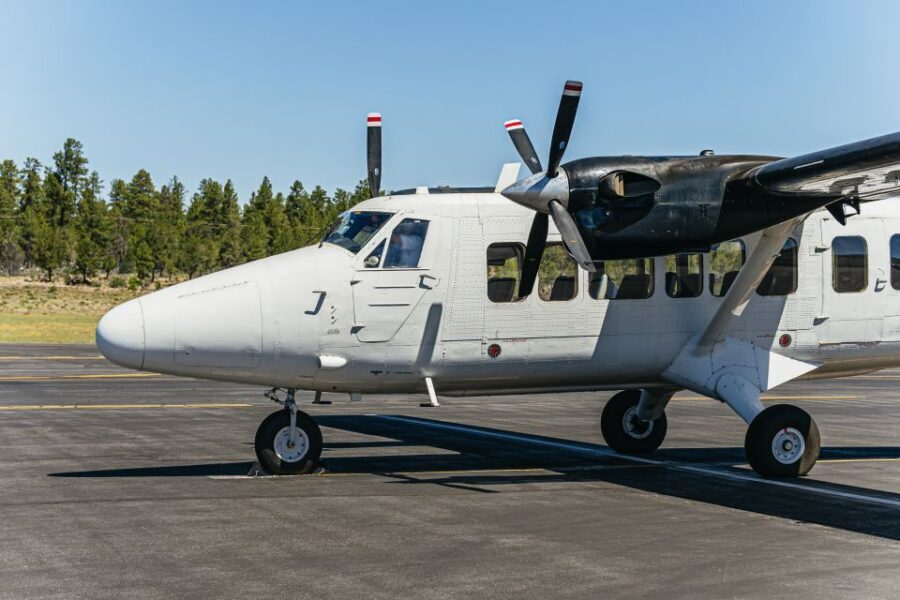
Two details make this one easy to recommend. The oversized panoramic windows are built for viewing and photography, and the multilingual headset narration turns the canyon into a guided story rather than just pretty scenery.
One possible drawback: the window frame and parts of the aircraft can slightly block or soften some photos, so plan for at least a few shots that aren’t tack-sharp.
In This Review
- Key highlights you’ll feel on the flight
- South Rim departure: getting above the canyon fast from Grand Canyon Village
- What you’ll see: Kaibab Plateau, Imperial Point, and the confluence from above
- Kaibab National Forest and Kaibab Plateau
- Imperial Point
- Confluence of the Colorado and Little Colorado Rivers
- Zuni Corridor
- Little Colorado River
- Narration that actually helps you read the canyon
- Windows and photo reality: how to get the best shots without disappointment
- Comfort, motion, and who should choose this airplane tour
- Weather, fires, and why visibility can change mid-week
- Value check: why $189 can feel worth it (or not)
- Small details that make the whole day smoother
- Should you book this Grand Canyon South Rim airplane tour?
- FAQ
- How long is the Grand Canyon Village Grand Canyon South Rim airplane tour?
- Where do I meet for the tour?
- What sights will we fly over?
- Is there narration during the flight?
- What languages are available in the audio narration?
- Do all seats have good views?
- What do I need to bring?
- Is the flight cancellable for a refund?
- Can I reserve first and pay later?
- What if visibility is poor due to smoke or weather?
Key highlights you’ll feel on the flight
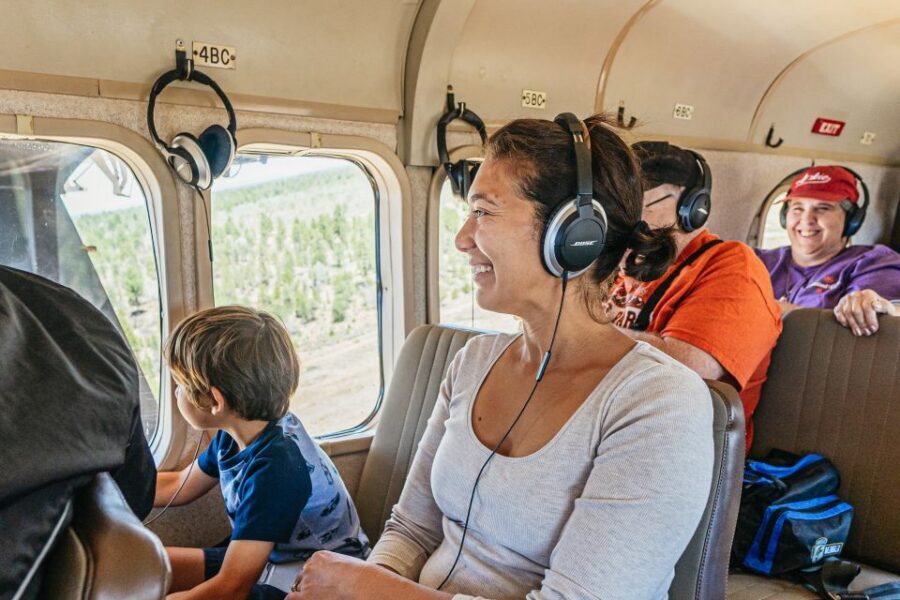
- Panoramic windows with unobstructed sightlines from every seat for photos and looking out
- Multilingual audio narration (Spanish, Thai, Chinese, Dutch, French, German, Greek, Indonesian, Italian, Japanese, Portuguese, Russian, plus English)
- Big landmarks from the air: Kaibab National Forest/Plateau, Imperial Point, Zuni Corridor
- The river confluence view of the Colorado and Little Colorado almost a mile below
- A small-plane vibe that keeps the experience focused (one report mentioned a nine-passenger aircraft)
- Great for limited time if you can’t fit multiple viewpoints on the ground
South Rim departure: getting above the canyon fast from Grand Canyon Village
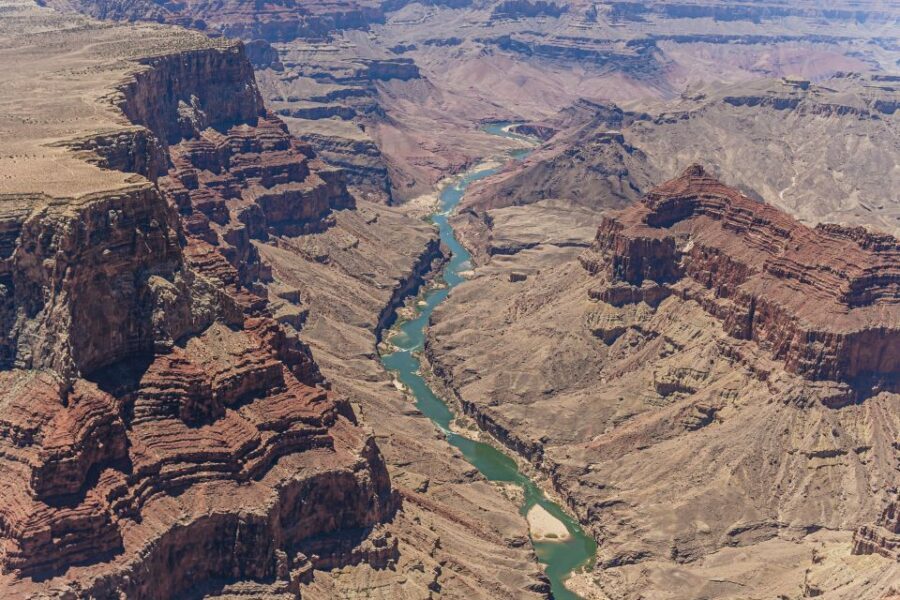
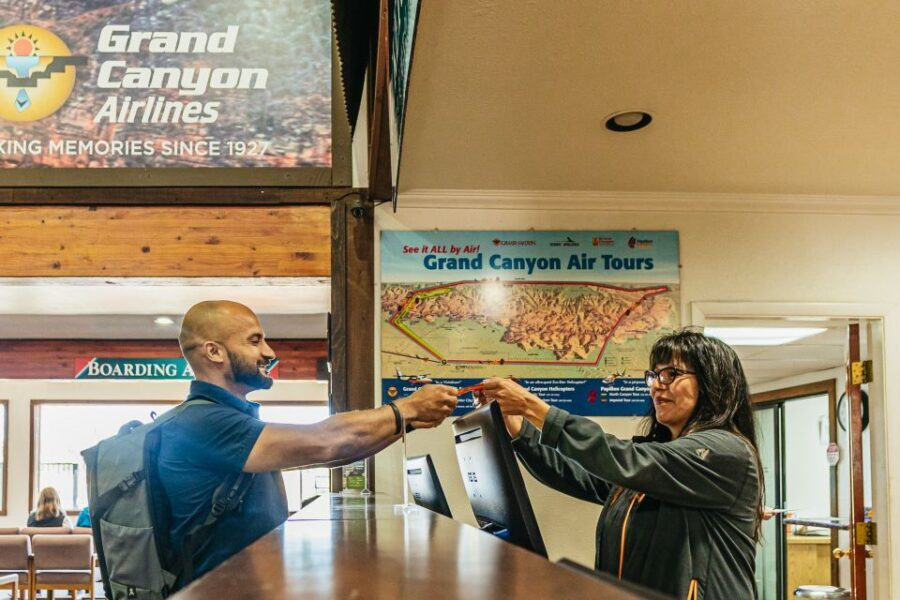
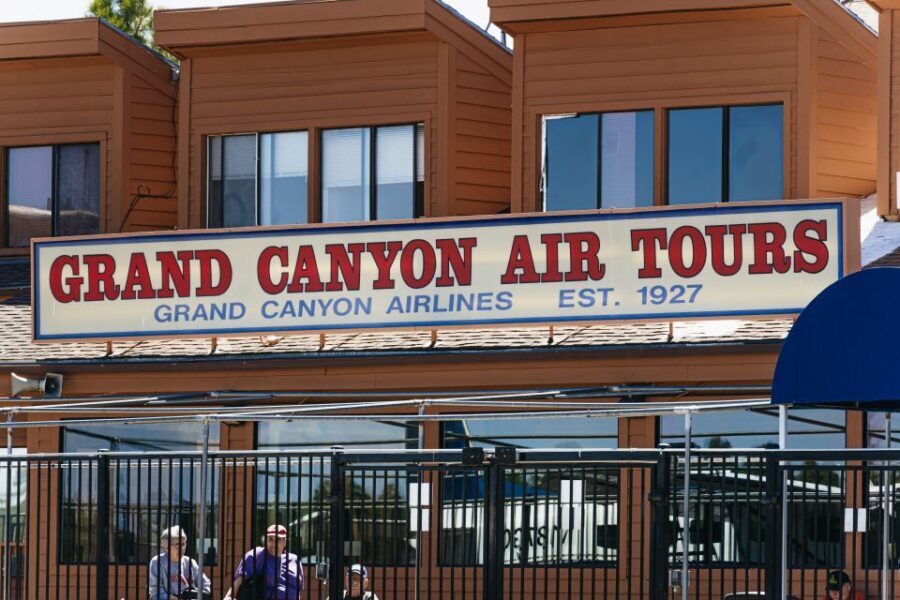
The tour starts near Grand Canyon Village, departing from Grand Canyon Airport on the South Rim. You meet at Grand Canyon Airlines – South Rim, and then you’re airborne quickly enough that you still feel like you’ve gotten a meaningful Grand Canyon experience even if your day is packed.
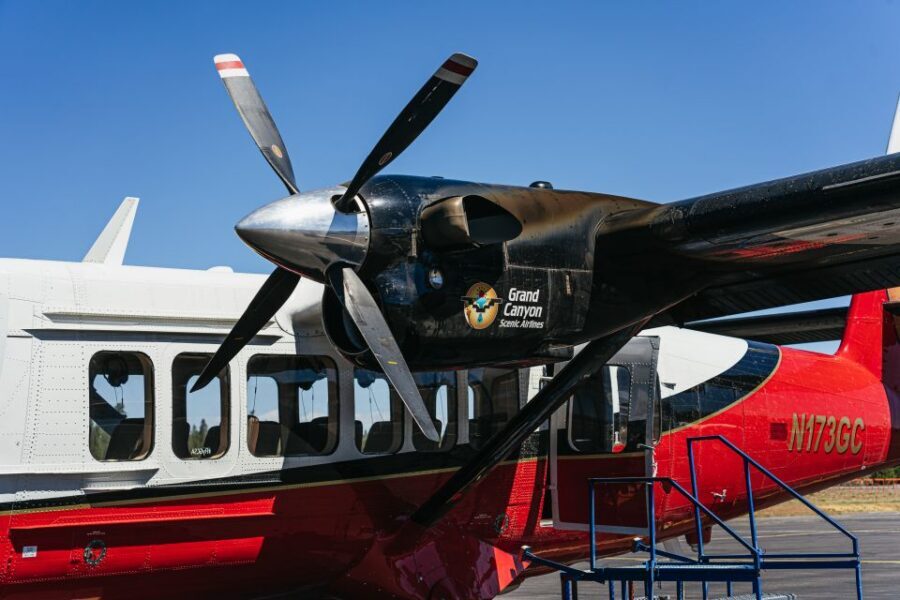
This is a fixed-wing airplane flight, and the time options are wide—40 to 165 minutes—so you can match the tour length to how much you want to spend in the air. Shorter flights are ideal if you’re already planning to do some time at viewpoints on the rim. Longer ones are for when you want the “big picture” view of multiple canyon features without driving, hiking, and juggling timed entry or crowded trails.
One thing I appreciate with this kind of tour is how little guesswork there is once you’re seated. You look out, you follow the story through the headset, and you get to see parts of the Grand Canyon that would take a lot of ground time to reach.
Other South Rim tours we've reviewed at the Grand Canyon

What you’ll see: Kaibab Plateau, Imperial Point, and the confluence from above
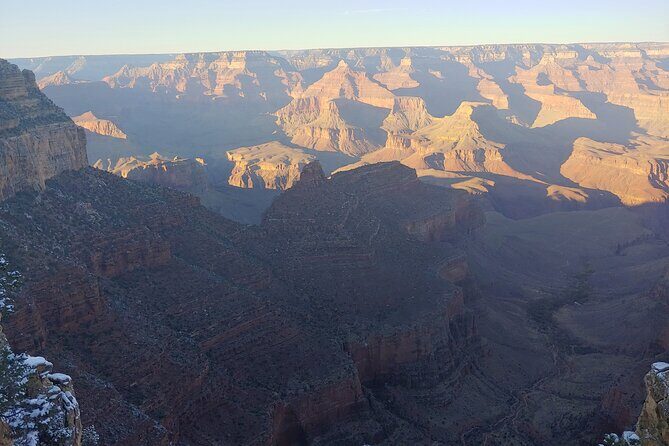
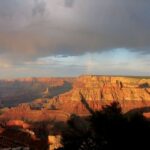
From the air, the Grand Canyon stops being a single overlook and becomes a whole system—plateau, forest, canyon walls, and rivers cutting through it.
Here’s the route focus you can plan around:
Kaibab National Forest and Kaibab Plateau
Early in the flight, you’ll get aerial views over Kaibab National Forest and the Kaibab Plateau. This matters because it gives you context. The forested high ground helps you understand where the canyon begins and how the terrain changes as you move toward the rim and down into the deeper layers.
From above, the contrast is immediate: flat-looking plateau patterns turn into steep canyon geometry. Even if you’ve seen photos on the internet, the aerial perspective helps you grasp scale—how the rim you’re standing on relates to the massive drop off.
Imperial Point
You’ll also fly over Imperial Point. Seeing named landmarks from the sky is a little more than sightseeing; it’s mental orientation. You start building a map in your head: this is where the canyon bends, this is where features cluster, and this is what you’d be trying to interpret if you were only on foot.
Confluence of the Colorado and Little Colorado Rivers
The standout feature, and why people love this tour, is the aerial view of the confluence of the Colorado and Little Colorado River. In the Grand Canyon, rivers are the “lines” that define everything else. From the air, you can trace how water has carved the canyon over time.
The included description also emphasizes how far down the Colorado River runs—nearly a mile below. That distance is hard to fully picture from the rim. From a plane window, the drop becomes visually real.

Zuni Corridor
Finally, you’ll soar over the Zuni Corridor. The canyon’s edges and corridors can look similar from ground viewpoints, but from above you can often tell where one corridor ends and another begins. It’s the kind of view that makes you understand why the Grand Canyon isn’t just a single canyon—it’s a connected landscape with major pathways.
Little Colorado River
You’ll also see the Little Colorado River as part of the route. Since the confluence combines both rivers, this sequence is useful: you’re not just getting one dramatic moment. You’re getting the lead-in and then the junction.
Narration that actually helps you read the canyon
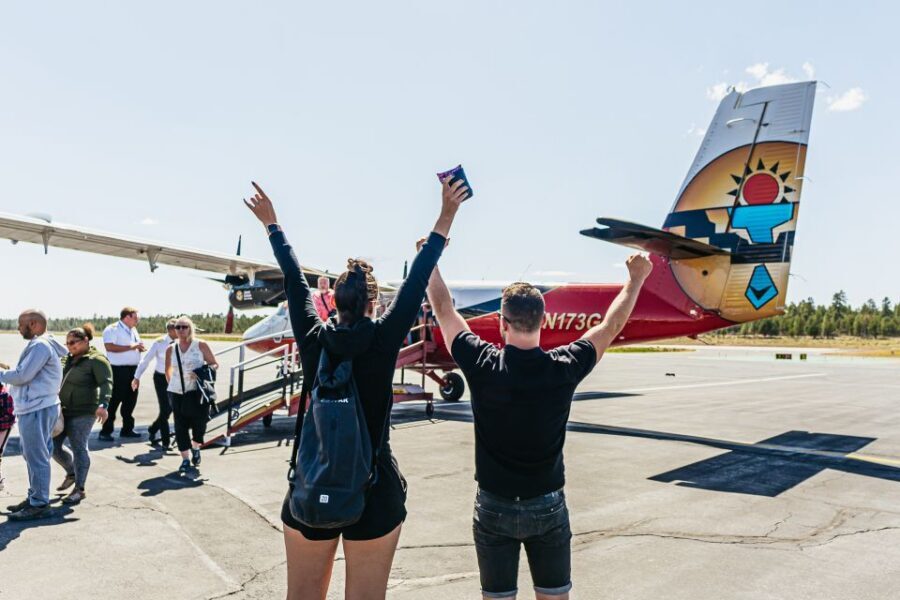
This tour includes storytelling through a multilingual headset narration, plus an English live tour guide. That combo is one reason I think it works so well for families and for visitors who don’t have a full day (or more) to explore on the ground.
The audio languages listed are extensive: Spanish, Thai, Chinese, Dutch, French, German, Greek, Indonesian, Italian, Japanese, Portuguese, Russian, and English. If you’re traveling with mixed-language groups, this is a big win. Everybody hears the same key points without crowding around one speaker or trying to decipher signage.
What I like most about onboard narration on a flight like this is timing. The canyon features you’re seeing are fleeting—your plane moves on. The narration gives you just enough context fast enough that you don’t feel lost.
In some past flights, pilots have also shared extra information in addition to the recorded track. For example, passengers have mentioned pilots such as Paul and Craig (noted for safety and an amazing experience), Jacob, Ryan and Ian, Sam, Captain Jack, Chelsea, Shawn, and Rich. Whether your captain adds extra commentary or sticks mainly to the headset track, you’ll still get guided meaning for what’s outside the window.
Windows and photo reality: how to get the best shots without disappointment
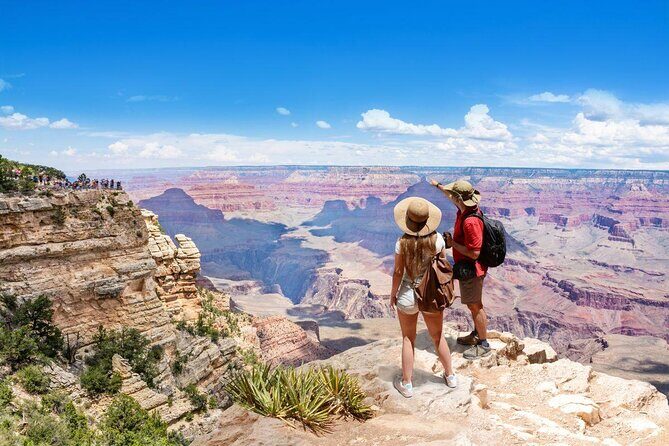
The big promise here is that the airplane has panoramic windows designed for optimal viewing, and the setup is meant so you’re not blocked by typical barriers. Many passengers point out that the views are better than hiking alone or bouncing between viewpoints because you get angles you can’t easily reach.
Still, there are two practical photo realities to know:
- Window frames and aircraft parts can affect sharpness. One passenger noted that elements of the plane blocked parts of the view and influenced picture quality.
- Light changes fast at altitude. Even on a smooth flight, brightness can shift as you rotate around canyon walls and river curves.
My practical advice: bring a phone or camera with a good “steady” mode, and don’t assume every window is equally clear at every moment. Take more short bursts than long clicks. And if you’re serious about photos, sit where you can see the route best for your flight direction—while the tour aims for views from all seats, your personal best angles can still vary.
One more nice touch: some departures include time or opportunities to take additional photos after the flight. That’s helpful if you want a final “I’ve got it” moment after your main canyon views.
Comfort, motion, and who should choose this airplane tour
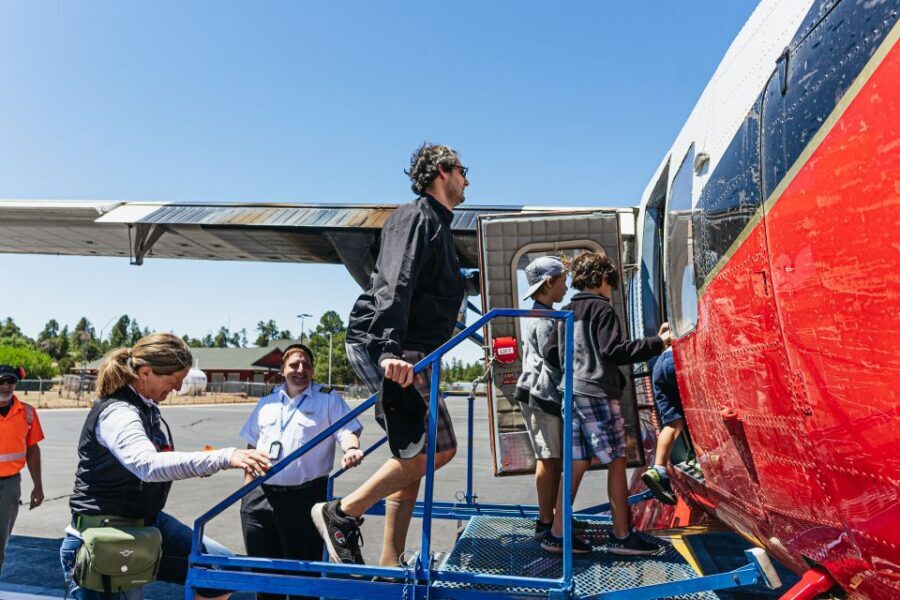
This is built for people who want canyon time without the long logistics of ground-only exploring. It’s a strong match for:
- Families who want a major payoff without a multi-mile hike
- Visitors with limited time on the South Rim
- Anyone who gets tired on stairs and uneven viewpoints
- First-timers who want the canyon’s scale right away
That said, airplane tours are still small aircraft experiences. Several reviews call out that flights can be a bit bumpy. If you’re prone to motion sickness, plan for that reality. It’s also smart to avoid a heavy meal right before boarding—one passenger specifically suggested this after mentioning a rougher feel in a smaller craft.
On the plus side, passengers frequently describe flights as smooth and safe. People have praised the pilots for flying well in wind and for keeping things comfortable and controlled, even when visibility was affected by conditions such as smoke.
Weather, fires, and why visibility can change mid-week
Grand Canyon skies can turn quickly. Fires on the landscape can create smoke haze, and that can reduce visibility. In at least one case, smoke from fires on the North Rim affected views, but the overall experience still rated extremely high.
Here’s the practical takeaway: try to schedule your flight earlier rather than later in your visit if you can, so you have some flexibility. If your day has bad air visibility, it’s better to accept a change than to force a rushed ground plan. On this tour, people have reported getting rescheduled when weather and visibility were an issue, including shifts without extra hassle.
Also, remember that “visibility” doesn’t always mean “bad day.” Even in less-than-perfect conditions, the aerial geometry—ridges, river bends, and canyon layering—still often comes through.
Value check: why $189 can feel worth it (or not)
At $189 per person, this isn’t the cheapest way to see the canyon. So does it earn its price?
I think it earns value when your goal is maximum canyon understanding for minimum time. You’re paying for:
- Time compression: you see major features without driving between viewpoints
- Aerial perspective: the canyon’s depth and river patterns look different from above than from the rim
- Guidance in your ear: multilingual headset narration helps you process what you’re seeing in the moment
- Photography-friendly setup: the panoramic windows are part of the product
One review also makes a useful comparison: some people find that a plane lets you see more broad scenery than a helicopter experience, which can translate into a greater “overview” feeling. If your priority is the canyon’s big picture, fixed-wing flights can be a good bet.
Where the price might feel less justified is if you already have several hours and you’re happy doing a slow rim walk plus a couple of short viewpoints. In that case, ground views can be enough. But if you only have a day, or you want a fast introduction to the canyon’s system, the cost-to-time ratio is strong.
Small details that make the whole day smoother
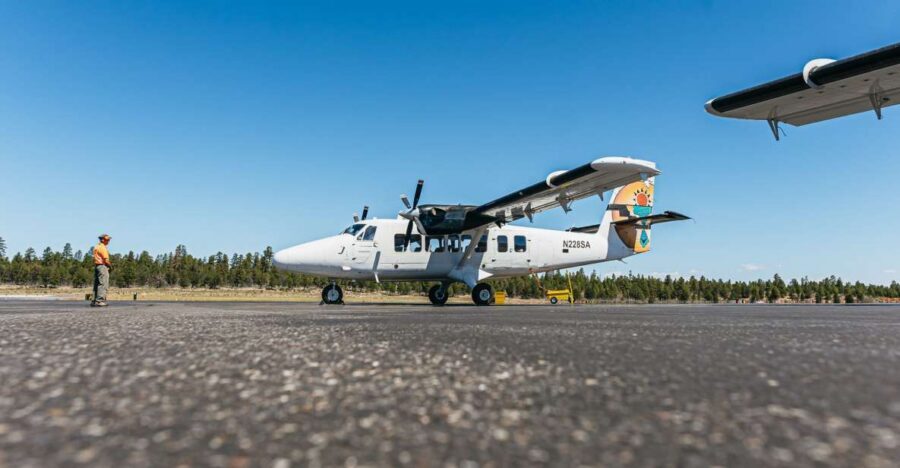
Even though this is a short flight, the experience around the flight matters. From the information you’re given and the way the crew runs things, you can expect a setup designed to get you checked in efficiently and seated fast.
Some past passengers described a comfortable waiting area with information about the flight, a safety orientation, and a restroom available. You can also expect a safety briefing and then boarding for a straightforward, focused ride.
One thing I’d keep in mind: confirm your booking in advance. In the past, passengers warned that forgetting a confirmation step can create avoidable stress. A quick reminder to do that before you leave your hotel goes a long way.
Should you book this Grand Canyon South Rim airplane tour?
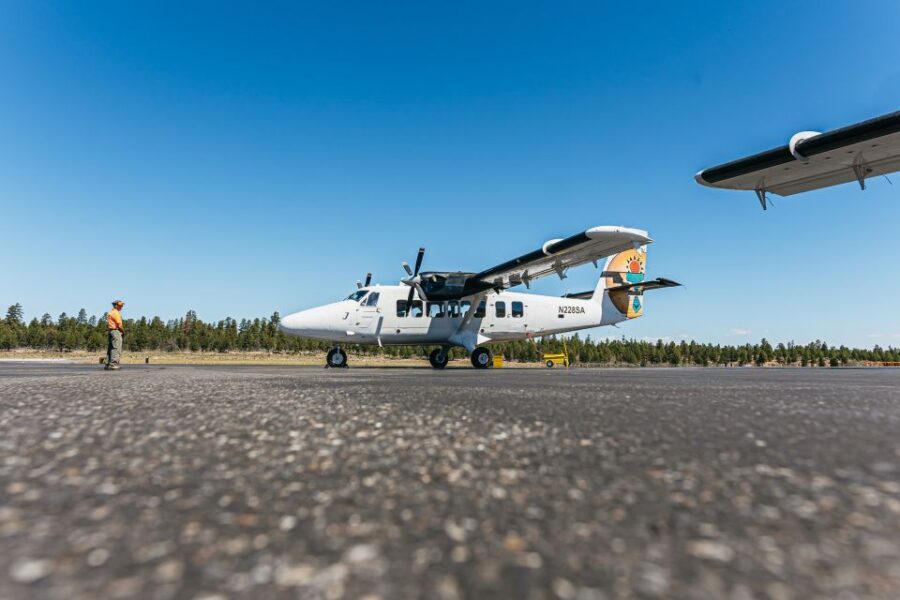
Book it if you want an efficient, guided way to see major Grand Canyon landmarks without turning your day into a logistics puzzle. This is especially worth considering if you’re:
- Short on time at the South Rim
- Traveling with family or anyone who doesn’t love long hikes
- Craving the river-and-scale perspective you can’t fully get from the rim alone
- Interested in learning what you’re seeing through multilingual narration
Skip it (or think twice) if you’re extremely photo-sensitive about window-frame clarity, or if you know you’re likely to feel motion sickness in smaller aircraft. In that case, consider bringing motion-sickness support and plan for the fact that not every frame will be perfect.
If you match those expectations, this is one of the more straightforward ways to get a real sense of the Grand Canyon’s size—Kaibab Plateau up top, the confluence below, and the river geometry that makes the whole place make sense.
FAQ
How long is the Grand Canyon Village Grand Canyon South Rim airplane tour?
The duration ranges from 40 to 165 minutes, usually offered in the morning and afternoon.
Where do I meet for the tour?
Meet at Grand Canyon Airlines – South Rim.
What sights will we fly over?
You’ll fly over the Kaibab National Forest, Kaibab Plateau, the Confluence of the Colorado and Little Colorado River, Imperial Point, and the Zuni Corridor.
Is there narration during the flight?
Yes. You get narration through a headset, and there is also a live English tour guide.
What languages are available in the audio narration?
Audio narration is available in: English, Spanish, Thai, Chinese, Dutch, French, German, Greek, Indonesian, Italian, Japanese, Portuguese, and Russian.
Do all seats have good views?
The tour notes that all seats provide unobstructed views for sightseeing and photography through oversized windows.
What do I need to bring?
You should bring a passport or ID card.
Is the flight cancellable for a refund?
Free cancellation is available up to 24 hours in advance for a full refund.
Can I reserve first and pay later?
Yes. It offers a reserve now & pay later option, with payment due later.
What if visibility is poor due to smoke or weather?
The tour can be affected by weather and visibility. In the past, some passengers reported being rescheduled when visibility was bad, rather than being left out.